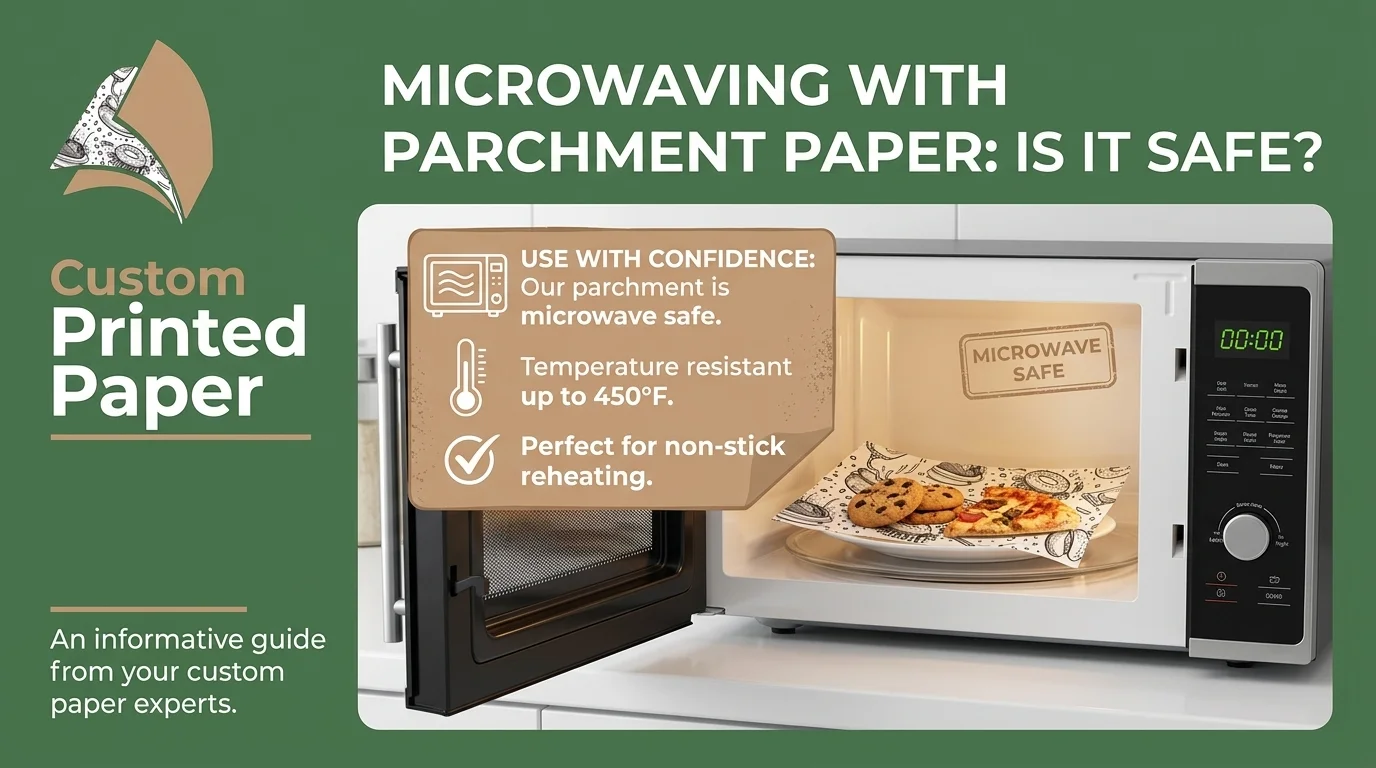
Can Parchment Paper Go in the Microwave?
May 11, 2026 Explore Blogs
✅ Quick Answer: Yes — parchment paper is microwave-safe when used correctly. It is heat-resistant, non-toxic, and grease-resistant, making it one of the best liners for microwave cooking and reheating. However, there are important time limits and usage rules to follow.
What Is Parchment Paper? How It Is Best for Microwaves
Parchment paper — also called baking paper or silicone paper — is a cellulose-based paper that has been treated with silicone or a similar non-stick, heat-resistant coating. Originally developed for baking and cooking, it has become a kitchen staple prized for its versatility, food-safety credentials, and remarkable temperature resilience.
The key characteristics that make parchment paper uniquely suited to microwave use are:
- Heat Resistance: Parchment paper is engineered to withstand temperatures up to 420–450°F (215–232°C). Since microwave ovens typically heat food to well below these thresholds during standard reheating and cooking, parchment paper remains structurally stable and chemically inert throughout the process.
- Non-Stick Silicone Coating: The silicone treatment creates a smooth, naturally non-stick surface that prevents melted cheese, sugary foods, fatty meats, and sticky sauces from adhering to the paper — keeping both your food and your microwave clean.
- Moisture Resistance: Unlike regular paper towels or wax paper, parchment paper resists moisture absorption. This means it won’t become soggy, disintegrate, or transfer paper fibers to your food during microwave reheating.
- Grease Resistance: The silicone barrier blocks cooking fats and oils from soaking through the paper — making parchment an ideal liner when microwaving fatty foods like bacon, sausages, or cheese dishes.
- Microwave Transparency: Parchment paper allows microwave energy (electromagnetic waves) to pass through freely to the food, unlike metallic materials which reflect microwaves and cause dangerous arcing. This means using parchment paper does not reduce microwave heating efficiency.
There are two main types of parchment paper available in the CA market:
Bleached Parchment Paper — White in color, treated with chlorine or chlorine-free bleaching agents for a uniform appearance. Fully food-safe when used within recommended temperature limits. The most commonly found variety in supermarkets.
Unbleached Parchment Paper (Eco Kraft) — Natural brown in color, produced without chlorine bleaching. The preferred choice for eco-conscious consumers, it carries the same silicone heat-resistant coating and performs identically to bleached varieties in the microwave.
💡 Pro Tip: Always check that your parchment paper is labeled ‘silicone-coated’ or ‘microwave-safe.’ Wax paper looks similar but is NOT microwave-safe — its wax coating melts at low temperatures and can contaminate food.
Is It Safe to Microwave Parchment Paper?
The short answer is yes — parchment paper is considered safe for microwave use by food safety authorities in the CANADA, including the FDA, when used as directed. Here is a more detailed breakdown of what makes it safe and what situations require extra care.
Why Parchment Paper Is Safe in the Microwave
- Chemically stable at microwave temperatures: The silicone coating on parchment paper does not break down, off-gas harmful chemicals, or leach into food at the temperatures generated by standard microwave ovens.
- No metallic content: Parchment paper contains zero metal — unlike aluminum foil, twist ties, or some food packaging — which means it does not spark, arc, or create fire hazards in the microwave.
- FDA recognized as food-safe: Parchment paper manufactured for food use in the CA meets FDA standards for food-contact materials, confirming it is safe for use with all food types in both conventional and microwave ovens.
- Does not absorb or transfer flavors: The non-porous silicone-coated surface does not absorb food flavors or odors, meaning it won’t transfer taste to your food during microwave heating.
When to Use Extra Caution
- Very dry foods for extended periods: If you microwave dry foods (plain bread, crackers, dry grains) for long periods without any moisture present, the parchment paper can become very hot and may begin to scorch at the edges. Always ensure there is some moisture in or around the food being heated.
- Extremely high-power microwaves: Commercial or convection microwave ovens that combine microwave energy with high-heat grill or broil elements can exceed the safe temperature range for parchment paper. In these modes, use microwave-safe glass or ceramic containers instead.
- Damaged or very thin parchment: Torn, punctured, or very thin parchment paper may not perform consistently. Always use intact sheets from reputable manufacturers rated for food use.
⚠️ Important Safety Rule: Never use wax paper, brown grocery bags, newspaper, or standard printer paper in the microwave — these are NOT heat-resistant and can catch fire or release toxic chemicals. Parchment paper is the only paper product reliably rated for microwave use.
Pros and Cons of Using Parchment Paper in the Microwave
Here is a balanced overview of the advantages and limitations of using parchment paper in the microwave:
| ✅ PROS | ❌ CONS |
| ✔ Heat-resistant up to 420–450 °F — handles microwave heat easily | ✖ Not suitable for very high-heat or broil microwave modes |
| ✔ Non-stick surface prevents food from sticking to microwave surfaces | ✖ Can scorch if dry food is microwaved for extended periods |
| ✔ Moisture-resistant coating keeps food from drying out | ✖ Single-use sheets create more waste than reusable options |
| ✔ Grease-resistant — ideal for fatty foods like bacon or cheese melts | ✖ Not all brands are equal — low-quality parchment may warp |
| ✔ Reduces splatter and mess inside the microwave cavity | ✖ Cannot replace microwave-safe lids for fully sealed reheating |
| ✔ Food-safe and chemical-free when used within temperature limits | ✖ Bleached varieties may not be ideal for eco-conscious users |
| ✔ Easy to cut and shape to fit any microwave-safe dish or plate | ✖ Unbleached Kraft parchment may have a slight natural odor when heated |
Bottom line: The pros far outweigh the cons for everyday microwave use. Parchment paper is one of the safest, most practical, and most versatile microwave accessories available in any CA kitchen.
How Long Can Parchment Paper Go in the Microwave?
Duration is the most critical variable when microwaving with parchment paper. While parchment paper is inherently heat-resistant, extended microwave exposure — particularly with dry foods — can push it toward its thermal limits. The table below provides clear, practical guidance on safe microwave durations:
| Duration | Use Case | Safety Level | Notes |
| Under 2 minutes | Reheating leftovers, melting butter | ✅ Fully Safe | Ideal everyday use — no concerns |
| 2–5 minutes | Steaming vegetables, cooking fish | ✅ Safe | Monitor for moisture; use vented cover |
| 5–10 minutes | Slow reheating, casseroles | ⚠️ Use Caution | Check parchment condition mid-way |
| 10–15 minutes | Long slow-cook microwave recipes | ⚠️ Monitor | Ensure food stays moist; avoid dry spots |
| Over 15 minutes | Extended microwave cooking | ❌ Not Advised | Risk of scorching; use microwave-safe glass |
The golden rule: Keep microwave sessions under 5 minutes for everyday reheating and cooking tasks. If you need to microwave food for longer than 10 minutes, transfer it to a microwave-safe glass or ceramic dish and use the parchment as a loose cover or liner rather than direct contact with a high-heat surface.
Practical Tips for Safe Timed Use
- Start with shorter heating intervals (1–2 minutes) and check food progress before continuing, rather than running the microwave for one long uninterrupted period
- When microwaving for more than 5 minutes, add a small microwave-safe cup of water alongside your dish to maintain moisture in the microwave cavity
- If you notice the edges of the parchment paper beginning to darken or curl, stop the microwave immediately — this signals the paper is approaching its thermal limit
- For meal prep involving multiple reheating rounds, use a fresh sheet of parchment paper for each session rather than reusing a previously heated sheet
- Loosely tenting parchment paper over food (rather than sealing it tightly) allows steam to escape and reduces heat concentration at any single point on the paper
Best Practices: How to Use Parchment Paper in the Microwave
Follow these simple best-practice guidelines to get the maximum benefit from parchment paper in your microwave safely and effectively:
- Use it as a liner: Place a sheet of parchment paper under food items on a microwave-safe plate to catch drips, grease, and food particles — keeping your microwave clean and reducing washing-up time.
- Use it as a loose cover: Loosely drape a sheet of parchment paper over bowls or plates to prevent splatter without sealing in steam. Leave one corner slightly open to allow steam to vent safely.
- Wrap foods individually: Wrap sandwiches, pastries, or leftover pizza slices in parchment paper for microwave reheating — the non-stick coating keeps crusts crisp and prevents sogginess better than plastic wrap.
- Never crumple tightly: A crumpled, tightly packed wad of parchment paper concentrates heat and increases the risk of scorching. Always use flat, open sheets with adequate surface area.
- Check your brand’s rating: Always verify that your parchment paper brand specifies microwave-safe use on the packaging. Leading CA brands including Reynolds, If You Care, and Kirkland Signature all clearly label their parchment as microwave-safe.
🌿 Eco Tip: Choose unbleached, chlorine-free parchment paper for the most environmentally responsible microwave experience. FSC-certified and compostable parchment options are now widely available across the CA and perform identically to conventional varieties in the microwave.
Frequently Asked Questions
Can I reuse parchment paper in the microwave?
You can reuse parchment paper for the microwave if it remains clean, intact, and undisclosed after the first use. However, for food safety and performance consistency, replacing your sheet after each use — especially if it has absorbed grease or food residue — is always the better practice.
Is parchment paper the same as wax paper?
No — and this distinction is critically important for microwave safety. Parchment paper is coated with heat-resistant silicone and is safe for microwave and oven use up to 450°F. Wax paper is coated with paraffin wax, which melts at low temperatures, can transfer wax to food, and is NOT safe for microwave use. Always check your paper type before microwaving.
Can parchment paper catch fire in the microwave?
Parchment paper will not catch fire under normal microwave reheating conditions. However, if left in a very high-powered microwave for an extended time with completely dry food and no moisture present, the edges may scorch or char. This is prevented by keeping sessions under 5 minutes, ensuring food contains moisture, and never operating the microwave unattended for long periods with parchment inside.
What paper products are NOT safe for the microwave?
- Wax paper — Wax coating melts and can contaminate food
- Aluminum foil — Causes dangerous arcing and sparking
- Brown grocery bags — Not heat-treated; can catch fire and may contain ink or recycled contaminants
- Newspaper — Highly flammable and contains printing inks that can transfer to food
- Standard printer paper — Not food-safe, not heat-resistant, can catch fire
The Final Word
Parchment paper is one of the most microwave-friendly kitchen tools available — and one of the most underused. Its unique combination of heat resistance, non-stick performance, moisture resistance, and food safety certification makes it genuinely superior to most alternatives for everyday microwave cooking and reheating across the USA & Canada.
The key rules are simple: keep it under 5 minutes for most tasks, ensure food has moisture present, use quality microwave-rated parchment, and never confuse it with wax paper. Follow these guidelines and parchment paper will be a safe, reliable, and remarkably convenient companion for everything from reheating last night’s leftovers to steaming vegetables and covering splatter-prone sauces.